

Inclusive Hiring and Refugee Week in WA Workplaces
What inclusive hiring looks like when people bring different life stories to work
Refugee Week is a timely reminder that every workplace is shaped by the life stories people bring with them.
For employers, inclusion is not only about welcoming difference in principle. It is about building hiring practices, onboarding systems and workplace cultures that allow people to contribute with dignity, confidence and clarity.
Across Western Australia, healthcare, childcare and ICT workplaces rely on people with different backgrounds, experiences and pathways into work. Some have followed traditional local training routes. Others have arrived in Australia after disruption, displacement or major life change. Many bring resilience, multilingual skills, cultural knowledge and a strong commitment to rebuilding stability through work.
Inclusive hiring means recognising that talent does not always arrive with a familiar story.
 Inclusion starts before the interview
A hiring process can either open the door or quietly close it.
For people from refugee and migrant backgrounds, the first barrier is often not capability. It may be language confidence, unfamiliar terminology, limited local references, overseas qualifications that are difficult to translate, or uncertainty about how Australian recruitment processes work.
Employers can make a practical difference by writing clear position descriptions, explaining essential requirements plainly and avoiding unnecessary criteria. A role should not ask for “local experience” unless that experience is genuinely essential.
In healthcare, childcare and ICT, many capable candidates may have strong practical skills but need a fair process that allows those skills to be understood.
 Different life stories can strengthen workplace culture
People who have rebuilt their lives often bring more than technical capability.
They may bring persistence, adaptability, empathy and a strong understanding of community. These qualities matter in essential service sectors, where trust, patience and communication are part of daily work.
In a childcare centre, an educator who speaks more than one language may help families feel seen and understood. In a healthcare setting, a worker with lived experience of navigating systems may bring patience and cultural awareness to client care. In ICT, someone who has worked across different countries or systems may approach problem solving with flexibility and practical judgement.
These are not soft extras. They can strengthen how workplaces serve real communities.
 Inclusive hiring does not mean lowering standards
A strong inclusive hiring process keeps standards clear.
It does not remove essential checks, qualifications, licences or safeguarding requirements. It simply asks whether the process is fair, accessible and relevant.
In childcare, this means keeping child safety and qualification requirements central while giving candidates clear guidance on what is needed. In healthcare, it means protecting compliance while recognising transferable skills and overseas experience. In ICT, it means looking beyond narrow career pathways and considering practical capability, systems thinking and problem solving.
The standard remains the standard. The pathway to demonstrating it may need to be more thoughtful.
 Employers should look for transferable strengths
A candidate’s previous work history may not look linear.
Someone may have worked in a different sector overseas, taken time away from employment while settling in Australia, or accepted entry level work below their skill level while rebuilding stability. This does not mean they lack value.
Employers can look for transferable strengths such as reliability, care, communication, technical reasoning, patience, leadership, organisation and commitment to learning.
In WA workplaces where staff shortages remain a real pressure, this broader view of capability matters. It helps employers see people more accurately.
 Onboarding is where inclusion becomes real
Hiring someone is only the first step.
The real test is what happens after they start. A workplace may appear welcoming during recruitment but feel confusing or isolating once the person is inside the team.
Good onboarding explains workplace expectations clearly. It gives people time to understand systems, language, reporting lines and cultural norms. It also gives managers space to ask practical questions without making assumptions.
A simple check in after the first week, the first month and the first three months can make a significant difference. It helps small issues become manageable conversations rather than reasons for someone to leave.
 Managers need confidence, not slogans
Inclusive workplaces are not built by statements alone.
Managers need practical confidence. They need to know how to support a person who is capable but unfamiliar with local workplace language. They need to know how to respond if a team member is excluded socially. They need to understand when flexibility is reasonable and when a role requirement is fixed.
This is particularly important in essential service environments, where teams are often busy, stretched and under pressure.
Inclusion should not sit outside operations. It should be part of how a workplace plans, communicates and leads.
 Recruitment partners can help employers see the whole person
Recruitment has an important role to play.
A thoughtful recruitment partner does more than forward a resume. They help interpret experience, ask better questions and support a fair assessment of capability. They can help employers understand where a candidate may need support, and where they may bring strengths that are not obvious on paper.
For candidates from refugee and migrant backgrounds, this can be especially important. A resume may not fully explain the person’s journey, skill set or readiness to contribute.
For employers, the benefit is a more accurate hiring decision.
Inclusion is a long term workforce strength
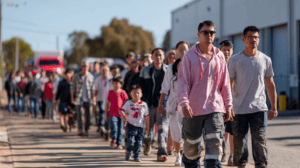
Refugee Week invites reflection, but inclusive hiring should not be limited to one week of the year.
WA workplaces need people who can care, teach, support, build, repair, protect and problem solve. Those people will not all have the same life story. They will not all have the same pathway into work. They will not all sound the same in an interview.
Inclusive hiring means being clear about what matters, fair about how people are assessed and thoughtful about how people are supported once they join the team.
When employers make room for different life stories, they do more than fill vacancies. They build workplaces that are more human, more capable and more connected to the communities they serve.
BB Recruitment works with employers and candidates across healthcare, childcare and ICT in Western Australia, supporting thoughtful recruitment that recognises both skill and personhood.
📧 enquiries@bbrecruitment.com.au
📞 08 6216 0014
🌐 linktr.ee/bbrecruitment