
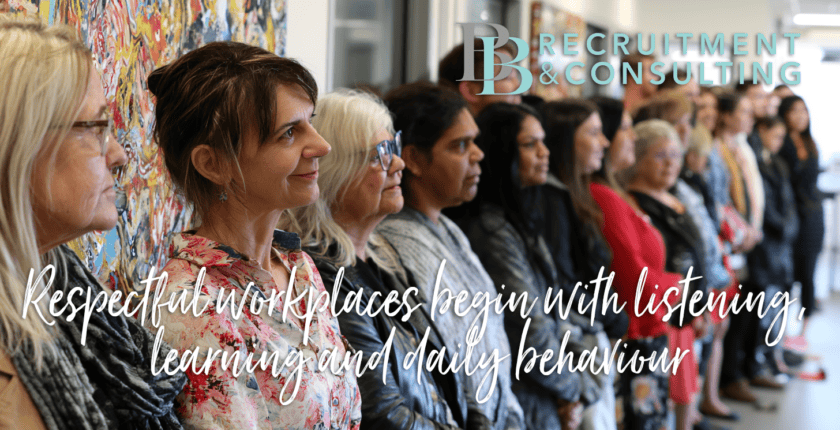
Respectful workplaces begin with listening, learning and daily behaviour
NAIDOC Week is an important time for recognition, celebration and reflection.
In 2026, the theme “50 Years of Deadly” marks five decades of NAIDOC Week celebrating Aboriginal and Torres Strait Islander voices, leadership, culture and community strength. For workplaces, it is also a reminder that respect is not only shown during a themed week. It is built through the way people listen, learn, speak and behave each day.
Across Western Australia’s healthcare, childcare and community service environments, respectful workplaces matter. They shape how staff feel. They influence trust. They affect whether people feel safe to contribute, ask questions, raise concerns and bring their full professional judgement to work.
 Respect is more than acknowledgement
Acknowledgement matters. It is appropriate to recognise Country, culture, Elders and the continuing contribution of Aboriginal and Torres Strait Islander peoples.
But acknowledgement should not sit apart from daily behaviour.
A workplace may begin a meeting with an Acknowledgement of Country, but the deeper question is what happens after that. Are Aboriginal and Torres Strait Islander staff listened to without being expected to speak for all people? Are cultural responsibilities understood with care? Are policies reviewed through a practical lens, not just a compliance lens? Are people given space to learn without turning that learning into extra unpaid labour for First Nations workers?
Respect becomes meaningful when it affects decisions.
 Listening before responding
Many workplace problems begin when people respond too quickly.
Listening is not passive. It is a professional discipline. It means allowing time for context before judgement. It means noticing who speaks often and who is rarely invited into the conversation. It means paying attention when someone says a process does not feel culturally safe, even if that process has been used for years.
In a WA childcare setting, this might mean listening to families about cultural practices, kinship structures or community obligations without treating difference as difficulty. In healthcare, it might mean understanding that trust may be shaped by previous experiences with systems, services or institutions. In recruitment, it means asking better questions and avoiding assumptions about availability, communication style or career pathways.
Listening does not weaken standards. It helps workplaces apply standards with more intelligence.
 Learning should be ongoing, not occasional
NAIDOC Week can open a conversation, but one week cannot carry the full responsibility for workplace learning.
Respectful employers think about learning as an ongoing practice. This can include cultural awareness training, consultation with appropriate Aboriginal-led organisations, reviewing onboarding materials, improving inclusive language and making sure workplace policies do not unintentionally create barriers.
The strongest workplaces do not treat learning as a one-off event. They build it into leadership habits.
That may look simple. A manager takes time to understand why a team member may need leave for cultural or community responsibilities. A centre director reviews how Aboriginal perspectives are included in learning environments without reducing culture to craft activities. A healthcare service considers whether its communication approach supports trust, dignity and clarity for Aboriginal clients, families and workers.
Small changes are not small when they are consistent.
 Daily behaviour is where culture becomes visible
Workplace culture is often described in broad terms, but people experience it in daily moments.
It is visible in how staff greet each other. It is visible in whose knowledge is trusted. It is visible in how conflict is handled, how rosters are discussed, how feedback is given and how people respond when they get something wrong.
Respectful workplaces are not perfect workplaces. They are workplaces where people are willing to reflect, repair and improve.
A leader does not need to have every answer. But they do need to create an environment where people are not punished for raising concerns, where cultural learning is taken seriously and where respectful conduct is expected from everyone.
 Avoiding tokenism in workplace recognition
For employers, NAIDOC Week should not become a visual exercise only.
Posters, artwork, morning teas and social media posts can be appropriate when they are handled respectfully. But they should be connected to substance. If a workplace uses Aboriginal artwork, it should be sourced properly, credited appropriately and used with permission. If a workplace shares a public message, it should reflect genuine action, not only seasonal language.
Tokenism often appears when recognition is separated from relationship.
A more respectful approach is to ask: who has been consulted, what are we learning, what will change, and how will this continue beyond the week?
 What this means for recruitment and workforce planning
Recruitment plays an important role in workplace respect.
The hiring process is often the first real experience a person has with an organisation. If the process feels rushed, unclear or transactional, it can weaken trust before employment begins. If it is thoughtful, respectful and well communicated, it can strengthen confidence.
For employers, this means looking carefully at position descriptions, interview questions, onboarding processes and workplace expectations. It also means understanding that inclusion is not achieved by hiring alone. People need to enter workplaces where respect is practised after the contract is signed.
A respectful recruitment process asks: are we creating access, clarity and dignity at every stage?
 The employer’s role
Employers set the tone.
They decide whether respectful behaviour is treated as a core workplace standard or an optional value statement. They decide whether staff are supported to learn. They decide whether managers have the skills to respond well when cultural issues arise. They decide whether workplace communication makes room for different experiences.
In healthcare and childcare especially, this matters because the work is human, relational and often emotionally demanding. Staff need environments where they can do careful work with clarity and trust.
Respectful workplaces do not happen by accident. They are built through leadership, policy, conversation and repeated daily behaviour.
 A practical reflection for NAIDOC Week
NAIDOC Week is a time to celebrate the strength, history, culture and achievements of Aboriginal and Torres Strait Islander peoples.
For workplaces, it is also a time to reflect on responsibility.
The question is not only what a workplace says during NAIDOC Week. The stronger question is what people experience in that workplace after the week ends.
Respect begins with listening. It grows through learning. It becomes visible in daily behaviour.