
What reconciliation asks of WA workplaces
National Reconciliation Week is a time for Australians to reflect on shared histories, cultures and achievements, and to consider the role each of us plays in reconciliation [3]. In 2026, the theme “All In” reminds workplaces that reconciliation is not a passive idea. It asks for participation, commitment and action beyond acknowledgement [2].
For employers across Western Australia, that matters.
Acknowledgement is important. Acknowledging Country, recognising Aboriginal and Torres Strait Islander histories, and respecting cultural identity all have a place. But acknowledgement should not be treated as the final step. It should be the starting point for deeper reflection about how people are supported, heard and respected at work.
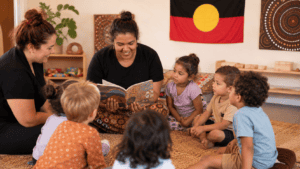 In Childcare, this may mean supporting educators to teach children about respect, place and belonging in ways that are age appropriate and meaningful. It may mean building relationships with local Aboriginal families, Elders and community members, rather than relying only on generic resources.
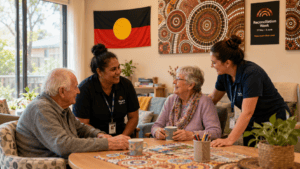 In Healthcare, reconciliation may be reflected in the way services understand cultural safety, trust and communication. A patient, resident, family member or worker may bring different histories and experiences into the workplace. Respect is not only shown through policy. It is shown through listening, patience and the way people are treated in ordinary moments.
 In ICT, reconciliation can sit inside access, inclusion and representation. Digital systems, recruitment processes, onboarding, training and workplace communication all shape who feels included. Employers should be asking whether their systems make space for different experiences, or whether they unintentionally create barriers.
This is where reconciliation becomes practical. It asks employers to look at decision making, workplace behaviour and leadership habits. Are Aboriginal and Torres Strait Islander people consulted on matters that affect them? Are cultural obligations understood? Are managers confident enough to have respectful conversations? Are recruitment practices open, fair and aware of context?
 Reconciliation Australia describes National Reconciliation Week as a focus for important conversations, greater understanding and continued action beyond the week itself [5]. That is the key point for employers. The week is a prompt, not a container.
In WA workplaces, meaningful reconciliation is rarely loud. It is often seen in the quieter choices: taking time to listen, making space for cultural knowledge, challenging assumptions, supporting fair access to opportunity and ensuring respect does not depend on who is in the room.
For employers, the question is not simply whether reconciliation has been acknowledged. The stronger question is whether it is visible in the way people work together.
 At BB Recruitment, we see workforce culture as something built through everyday decisions across Childcare, Healthcare and ICT. Reconciliation belongs in that same space. It is part of how workplaces create trust, belonging and long term strength.
This aligns with BB Recruitment’s broader content direction, which centres realistic workplace stories, community trust and practical workforce insight across WA sectors.